Behind the Boards: The St. Louis Producers Crafting a New Sound From the City's DNA
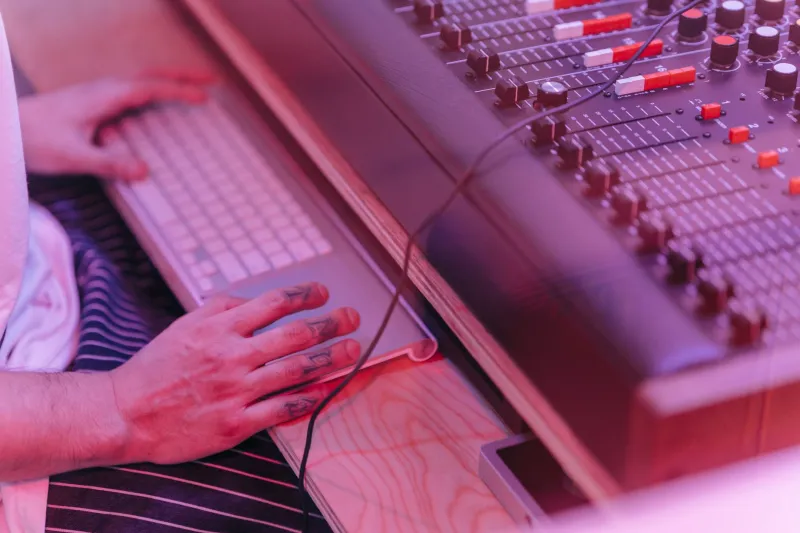
There's a moment in almost every great St. Louis track — a low-end rumble, a vocal chop, a guitar lick that feels like it was excavated from somewhere deep in the city's history — where you just know where it came from. You can't always name it, but you feel it. That's not an accident. That's the work of a producer who knows exactly what they're building on.
St. Louis has spent decades being criminally underestimated in national conversations about American music. But ask anyone who's been paying attention to what's coming out of the Lou lately, and they'll tell you the same thing: something is happening here. And a lot of it starts in home studios, rented sessions at local facilities, and late nights behind a DAW with a head full of city history and a hard drive full of samples.
The Blueprint Already Existed — They're Just Expanding It
To understand what St. Louis producers are doing right now, you have to understand what they're working with. This is a city that gave the world Chuck Berry, Tina Turner, Nelly, and Chingy. It's a city where the blues ran up the Mississippi and collided with gospel and soul. Where hip-hop found fertile ground in the '90s and never really let go. That's not a footnote — that's a foundation.
What's exciting about the current crop of producers coming up in St. Louis is that they're not treating that legacy like a museum exhibit. They're treating it like a sample pack. The blues isn't something to reference reverently from a distance; it's something to flip, chop, and layer under an 808 until it sounds like something nobody's heard before but everybody recognizes on some gut level.
That tension between honoring history and refusing to be constrained by it is exactly where the most interesting music lives.
Blending Eras Without Losing the Plot
One of the defining characteristics of the St. Louis production scene right now is a genuine fluency across genres. Producers here aren't siloed the way they might be in cities with more rigid scene identities. A producer who spent the morning working on a hip-hop project might spend the afternoon layering strings for an R&B vocalist and close out the night mixing a track with a live band element.
That versatility isn't just a flex — it's a reflection of how music actually moves through the city. St. Louis listeners have always had eclectic tastes, and the producers who grew up here absorbed all of it. Gospel from Sunday mornings, rap from the radio, rock from the venues on Cherokee Street, jazz from the clubs that have been holding it down for decades. When all of that lives in the same person, the music that comes out is genuinely hard to categorize — and that's a feature, not a bug.
Modern production tools have only accelerated this. With access to the same plugins, samples, and virtual instruments as anyone in Atlanta or LA, St. Louis producers are asking a more interesting question than "what can we make?" They're asking "what can we make that sounds like us?"
Regional Identity in a Globalized Industry
Here's the honest tension that every regional music scene is navigating right now: the internet flattened geography in ways that are both liberating and a little disorienting. You can upload a track from a basement in south St. Louis and have it streamed in Seoul by the weekend. That's genuinely incredible. But it also means the pressure to sound "universal" — which often really means "like wherever is trending right now" — is real and constant.
The producers pushing St. Louis forward are largely refusing that trade-off. They're betting that specificity is actually the more powerful move. That a track that sounds deeply, unmistakably rooted in a particular place and community will connect more honestly than one that's been sanded down to appeal to everyone and ends up appealing to no one.
That's a poptimist argument if there ever was one — the idea that popular music is most powerful when it's also personal. When it carries a zip code.
The Collaborative Energy Driving It All
Something else worth noting: the St. Louis production scene right now has a collaborative spirit that feels less competitive than generative. Producers are sharing sessions, co-producing, and actively bringing each other into rooms. That kind of community-building is what separates scenes that flash briefly from ones that sustain and grow.
Local studios and creative spaces have played a real role in this. When producers have places to gather — even informally — ideas cross-pollinate in ways they simply can't over a file-sharing link. The city's relatively lower cost of living compared to coastal music hubs has allowed more artists and producers to actually stay, to build infrastructure here rather than feeling forced to relocate to make a career work.
That's a real advantage, and the smart people in the scene know it.
What Comes Next
It would be easy to frame all of this as a story about St. Louis "finally" getting its moment — but that framing undersells what's actually happening. This isn't about waiting for outside validation. The producers working in this city right now are building something with or without a co-sign from the coasts, and that self-sufficiency is part of what makes the music feel so alive.
The St. Louis sound has never been one thing, and it isn't now. It's blues DNA running through trap production. It's gospel harmonics over synthetic percussion. It's hip-hop lyricism sitting on top of jazz chord progressions. It's all of that city history — the complicated, beautiful, painful, joyful whole of it — being processed through the ears and instincts of producers who love this place enough to make it sound like itself.
If you haven't been listening closely, now's a really good time to start.