Fly Under the Radar: Why Being Overlooked Is St. Louis's Greatest Creative Gift
Let's be honest about something. St. Louis doesn't get the flowers it deserves. Not from the national press, not from the music industry gatekeepers, not from the film tastemakers who still act like meaningful American culture only happens in New York or Los Angeles. And here's the thing — that neglect might be the best thing that ever happened to us.
There's a particular kind of freedom that comes with being underestimated. When nobody's watching too closely, you stop performing for the audience and start making things for yourself. For your neighbors. For the city that raised you. And increasingly, that's exactly the kind of art that cuts through — not because it was engineered to, but because it couldn't help it.
The Algorithm Doesn't Live Here
Somewhere in the last decade, a significant chunk of American creative culture got quietly hijacked. Not by any one villain, but by the slow, grinding pressure of visibility metrics. Stream counts. Engagement rates. Follower growth. The question "is this good?" started getting replaced by "will this perform?"
Artists in cities with major industry infrastructure feel that pressure intensely. When you're surrounded by A&R scouts, influencer culture, and the constant hum of what's trending, it's genuinely difficult to tune it out. The market is right there. The comparison is inescapable.
St. Louis doesn't have that problem in the same way. The local creative scene has never been primarily oriented around impressing outsiders. It's oriented around serving the community that's right in front of it — the folks at the South Grand block party, the regulars at the Delmar Loop venue, the families packing into a Cherokee Street gallery opening on a Saturday afternoon. That community doesn't care if you've got a blue checkmark. They care if what you made feels true.
That distinction produces a different kind of artist. One who's more likely to take a weird creative risk because there's no industry handler in the room telling them to play it safe. One who's more likely to dig into something uncomfortable or hyperlocal because nobody's pressuring them to make it universally palatable.
Substance as a Survival Strategy
There's a reason St. Louis has consistently punched above its weight in terms of cultural output relative to its national profile. Think about the musicians who've come out of this city carrying a sound that was distinctly, stubbornly their own. Think about the visual artists working in spaces like Contemporaryist or emerging from institutions like COCA, making work that engages with this city's complicated history — its racial geography, its industrial past, its working-class identity — without softening the edges to make it easier to sell.
That commitment to substance isn't just aesthetically admirable. It's a survival strategy. In a media landscape where trends cycle out in months and yesterday's viral moment is tomorrow's cringe, artists who build on something real have a foundation that lasts. The work holds up because it was never built on sand.
The underdog mentality enforces a kind of discipline. You can't coast on hype when there isn't any. You have to earn your audience one honest moment at a time. And weirdly, that process makes the work better.
What "Community-Rooted" Actually Means
The phrase "community-rooted art" gets thrown around a lot, and like most things that get thrown around a lot, it's started to lose some meaning. So let's get specific about what it looks like here.
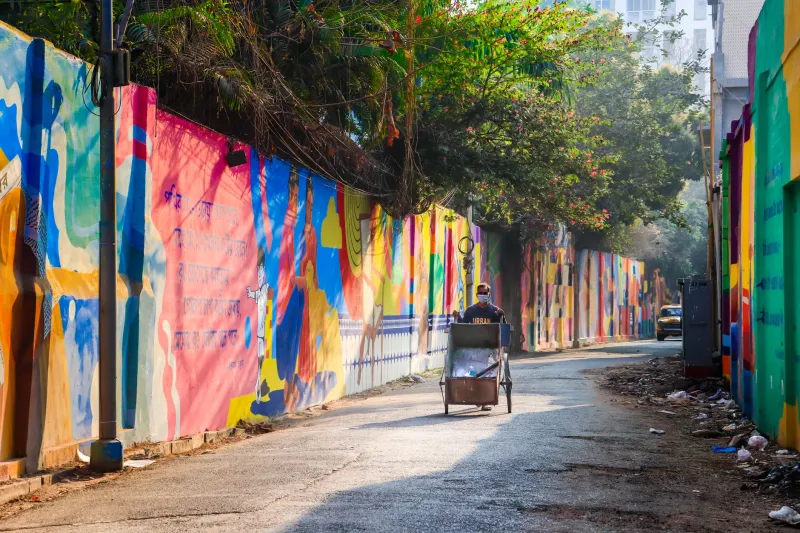
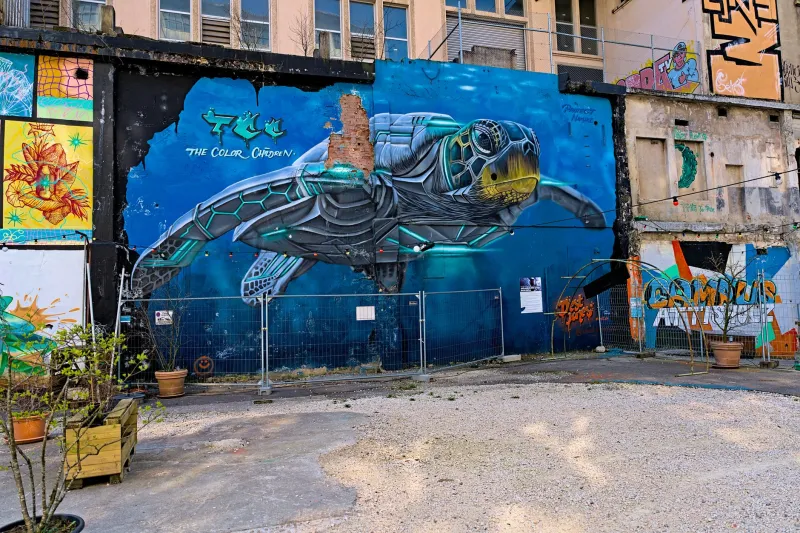
It looks like a hip-hop producer sampling sounds from the Hill neighborhood where their grandmother still lives. It looks like a playwright at the Black Rep workshopping a script with the North St. Louis community the story is actually about. It looks like a muralist in Dutchtown painting something that references the specific, irreplaceable texture of that block — not a generic "urban inspiration" piece, but something that could only exist in that exact spot.
This kind of work doesn't translate easily into a press release. It doesn't fit neatly into a streaming playlist algorithm. But it resonates with a depth that more polished, more marketable work often can't touch. Because the people it's speaking to know it's actually speaking to them, not at them.
And here's where St. Louis's underdog status becomes genuinely radical: the city creates the conditions where this kind of work is still economically survivable. Lower cost of living means artists aren't forced to monetize every creative impulse immediately. Accessible studio space, a tight-knit network of venues and galleries willing to take chances, and a local audience that's hungry for something real — these aren't small things. These are the infrastructure of authentic creative culture.
The Hype Cycle and the Long Game
Look at what happens to cities that get anointed as "the next big thing" in American culture. There's a rush of attention, a flood of transplants chasing the energy, rents climb, longtime residents get pushed out, and the original character that made the place interesting in the first place gets slowly hollowed out. The hype consumes its own subject.
St. Louis has largely been spared that particular cycle. Not entirely — the pressures of gentrification and displacement are real here too, and we shouldn't romanticize them. But the city hasn't been subjected to the kind of national spotlight that turns creative neighborhoods into content and communities into aesthetics.
That means the artists who are here are here because they chose to be. Not because it was trendy. Not because some magazine declared it the new Brooklyn. Because this city, with all its contradictions and all its beauty, is genuinely where they want to make their work. That intentionality shows up in the art.
Optimism as a Radical Act
Here at Poptimism STL, we've always believed that celebrating your city isn't naive — it's necessary. And what we're describing here isn't blind boosterism. St. Louis has real challenges, real inequities, real work to do. The artists who are making the most vital work here know that better than anyone, because their art is often directly engaging with those realities.
But there's something genuinely worth celebrating in the fact that this city keeps producing creative work that prioritizes truth over trends, community over clout, and longevity over virality. In an age of hype, that's not a small thing. That's practically a countercultural stance.
So yeah — maybe the national tastemakers aren't paying attention. Maybe St. Louis will never be the city that gets the breathless magazine profile declaring it the cultural capital of the Midwest. Maybe we'll keep flying under the radar.
Honestly? We're good with that. The work speaks for itself. It always has.