Genre Is a Cage and St. Louis Musicians Have Already Picked the Lock
There's a version of the St. Louis music story that gets told over and over. It starts with Chuck Berry, moves through Miles Davis, nods at Nelly, and then sort of... trails off. Like the city handed the baton to the world and forgot to keep running.
That story is wrong. Or at least wildly incomplete.
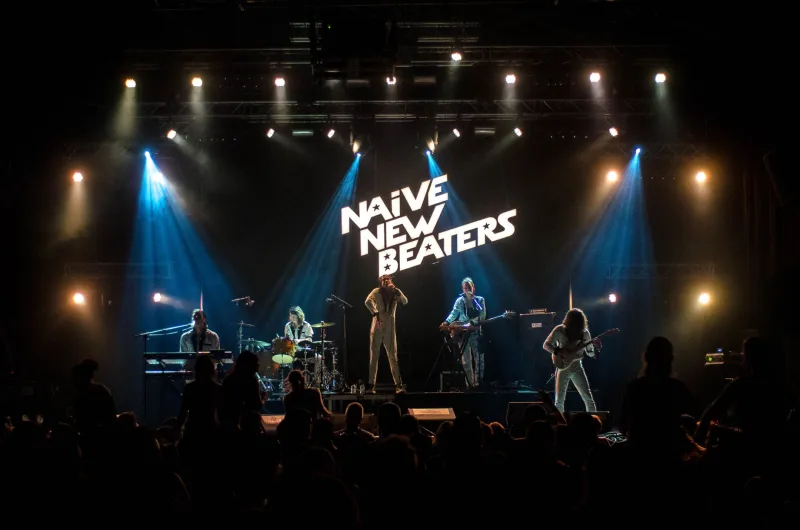
Because right now, in rehearsal spaces off Cherokee Street, in home studios in North City, in basement venues in the Delmar Loop, something is happening that doesn't have a clean label yet — and that's exactly the point.
The Legacy Is Real, But It's Not a Leash
Ask any St. Louis musician about the weight of this city's musical history and you'll get a complicated answer. There's genuine pride, sure. But there's also a kind of creative claustrophobia that comes with living in the shadow of legends.
"Everyone wants to know if you sound like something they already know from here," says one local R&B artist who's been releasing music independently for the past four years. "Like the only way to be authentically St. Louis is to sound like you're from a different decade."
That tension — between honoring a legacy and refusing to be imprisoned by it — is producing some of the most interesting music this city has ever made. Artists aren't abandoning their roots. They're composting them. Taking the richness of what came before and growing something genuinely new out of it.
Soul music's emotional directness is showing up in hip-hop production that feels more vulnerable than hard. The blues tradition's comfort with discomfort is bleeding into indie rock records that aren't afraid to sit in a feeling for a while. Gospel architecture — that call-and-response, that sense of communal release — is threading its way through electronic sets that pack Cementland and City Foundry.
What Happens When You Stop Trying to Export Your Sound
One shift that keeps coming up in conversations with local artists is a conscious decision to stop chasing what's popping elsewhere. For a long time, the pressure to "make it" meant making music that sounded like it came from somewhere else — Atlanta, New York, LA. The cities with the industry infrastructure. The cities that get the magazine covers.
Something changed. Partly it's the democratization of distribution. When you can put a record on every streaming platform from your apartment in Soulard, the gatekeepers lose a little of their power. But it's also something more philosophical.
"I stopped asking if my music would work in other markets and started asking if it was true," explains a producer who's worked with artists across the city's hip-hop and neo-soul scenes. "True to what I've actually lived. True to what this place actually sounds like when you grow up here."
What does St. Louis actually sound like when you grow up here? It sounds like contradiction. It sounds like a city that is simultaneously Midwestern and Southern, working-class and culturally ambitious, deeply segregated and endlessly creatively cross-pollinated. That's not a liability. That's a palette.
The Blending Is the Point
Walk into any open mic night at a spot like Foam or The Crack Fox on a good evening and you'll see it in real time. A rapper who closes their set with something that's basically a hymn. A folk singer whose chord progressions are lifted directly from St. Louis blues tradition but whose lyrics are processing social media anxiety. A band that sounds like what would happen if Ike Turner and Fugazi got stuck in an elevator together and decided to collaborate instead of argue.
None of these artists are being weird for weirdness's sake. They're being honest. And honesty, when you're from a place as genuinely complicated as St. Louis, tends to produce music that resists easy categorization.
The city's geography plays into this more than people give it credit for. St. Louis neighborhoods have always had distinct sonic identities — the North Side's deep connection to gospel and hip-hop, South City's rock and punk lineage, the Central West End's jazz history. What's different now is that artists are moving through all of those neighborhoods, physically and culturally, and bringing the cross-contamination home to their studios.
The Infrastructure Is Catching Up
For years, one of the legitimate knocks on the St. Louis music scene was that the infrastructure didn't match the talent. The booking pipelines weren't there. The industry connections were thin. The venues, while beloved, couldn't always support the kind of career momentum an artist needed to sustain themselves.
That's genuinely shifting. Independent labels and collectives operating out of St. Louis are starting to build real ecosystems rather than just releasing music into the void. Producers are developing reputations that extend beyond city limits. And perhaps most importantly, artists are finding ways to support each other financially and creatively in ways that make staying here feel less like a sacrifice and more like a strategy.
"The narrative used to be that you had to leave to be taken seriously," says one musician who turned down relocation offers from management interested in moving her to Nashville. "Now I think staying is its own kind of statement. You're saying this place is worth building."
Optimism as Artistic Practice
There's something almost defiantly hopeful about what's happening in St. Louis music right now. This is not a city that gets a lot of optimistic press. The national narrative about St. Louis tends to run toward decline, division, and departure. And those things are real — nobody's pretending the challenges aren't there.
But artists have a particular relationship with optimism. Not the naive kind that pretends problems don't exist, but the generative kind that insists on making something beautiful anyway. That insists the future is still worth imagining.
The musicians building this new St. Louis sound are doing exactly that. They're not waiting for permission from the coasts. They're not trying to fit their city's complexity into someone else's genre box. They're doing what artists in this city have always done at their best — taking everything that's hard and strange and specific about this place and turning it into something that makes you feel less alone.
The St. Louis sound isn't a museum piece. It's not a nostalgia trip. It's a living, mutating, gloriously stubborn thing — and right now, it's refusing to be anything other than exactly itself.
Honestly? That sounds like St. Louis to us.